We Conquered All of Europe: Red Odyssey II charts the re-emergence of Liverpool FC as one of the most feared and respected teams in European football. In 2015, Jurgen Klopp arrived at Anfield and set about rebuilding a sporting empire. In order to succeed he would need to transform its legions of fans from doubters into believers – and, in the process, would take them on the greatest of sporting odysseys.
In this book, I chronicle the whole journey through the eyes of the people who lived it, the supporters. Also included are key insights from former players, as well as eyewitness accounts of some of the most incredible moments of the Klopp era. Relive the humbling of Barcelona’s Messi and Suarez. Absorb the electric atmosphere on the Kop as the Reds pulled off the seemingly impossible, and journey with the fans as they conquered all of Europe.
Red Odyssey II takes the reader through it all – the highs and the lows – and describes how Klopp awakened one of football’s sleeping giants.
Liverpool have won their second trophy in two months, adding the UEFA Super Cup to the Champions League. There are those who will say it’s not a major honour, calling it a ‘friendly,’ or even ‘the European Charity Shield.’ But do we care, really.
If you’re in it, then you’re doing something right as a club. And, if you win it, then for players and supporters there’s no better feeling. Winning trophies is a habit every team craves.
For so long Klopp was criticised for losing finals. Since 2012, I have listened to rivals saying “What have you won recently?” and of course Jordan Henderson had not lifted a trophy as captain of the club. Until now.
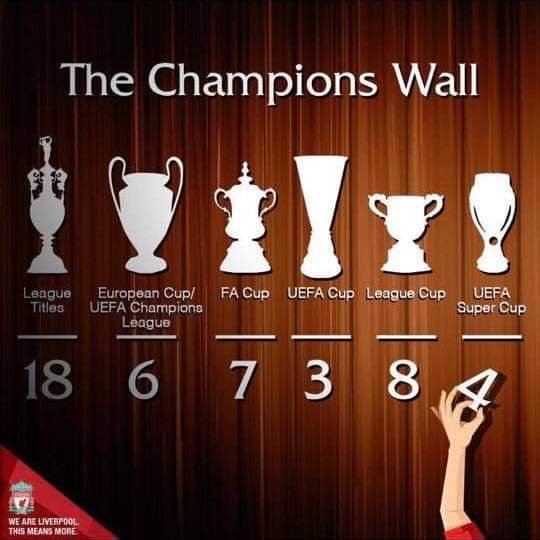
Liverpool’s win last night puts the Reds on 46 major trophies, one ahead of United. We are now the most successful club in the country. Any United fan arguing that the Super Cup isn’t a major trophy should look at their own club’s website, where it is listed as just that.
Now all of us, manager, players and supporters, can hold our heads up high. Liverpool are back on the trophy trail and back on our perch. Next up, we have a chance to add the World Club Championship, and who knows what else. I love that winning feeling.
Bill Shankly, a famously socialist thinker and miner from the small town of Glenbuck in Scotland, frequently spoke of the union between players, manager and supporters at Liverpool football Club. He described it as a ‘holy trinity.’ To Shanks, there was a common bond and football was a working class sport.
He wanted his men to be payed well, of course. One of his most inspirational quotes was about what he would do if he was a bin man. Typically, He spoke of wanting to be the best bin man in the world, with the cleanest streets. He also said that his workmates would receive the biggest bonuses, and why shouldn’t they? After all, what would make anyone think a bin man was less important than anyone else? He asked.
I believe that behind these sentiments is a philosophy based on collectivism, equality and, put simply, an honest wage for an honest day’s work. Shankly abhorred anyone who he felt wasn’t giving everything they had for the team.
“To play for me, a player has to be prepared to run through a brick wall and come out fighting on the other side,” was another immortal quote.
Nobody working for the great man could ever get away with half measures, and certainly nobody would be allowed to see themselves as a star. Shankly did talk about the value of individual reward, though he saw it as the result of collective effort.
He once pointed out that so many of his players had achieved international caps, a personal accolade. However, he would go on to lecture that it was through their collective efforts, that they had achieved individual gains. You don’t get into the national team unless you are doing well for your club, and your club only does well when it works as a team, was his reasoning.
In this respect, the boss also felt that the supporters and the people of Liverpool were also part of the collective. Their efforts from the terraces were equally important and central to the vision. While he didn’t have the power or resources to pay them, he resolved to reward them with silverware – to make the people happy and proud. They would hold their heads up high, and say ‘we are Liverpool,’ he promised.
Stretch the gap between player, manager and supporters too much, and the ties that bind might snap. The bond may be broken, the trinity undermined. In truth, Shankly could never have envisage the disparity in earnings between his players and those who stood on the terraces. Nobody in the 1960s and 70s could have.
The level of wage inflation in football since those heady days can scarcely be believed even today. We do know that Bill was often prepared to spend big on a transfer fees, if he thought the player could improve his squad. He broke a number of records in this respect during his tenure.
However, it’s about proportion. And, we have certainly lost all sense of proportion today.
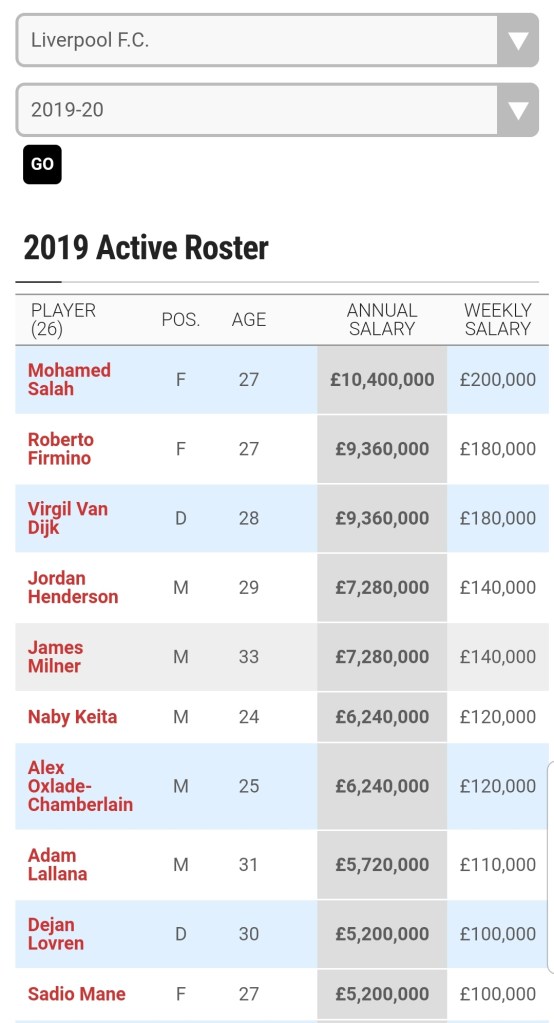
Figures published by Spotrac recently, show the eye-watering amounts shelled out by the club to its stars. ‘That’s modern football,’ you might say. ‘Yes, but a player’s career is short,’ you could argue.
It is, and they are. But the disparity is truly shocking, even allowing for inflation.
What, then, would Shankly make of today’s sky-high wage bills. Liverpool’s total payroll bill of £104,780,000 in 2019/20 truly dwarfs the levels he would have been familiar with.
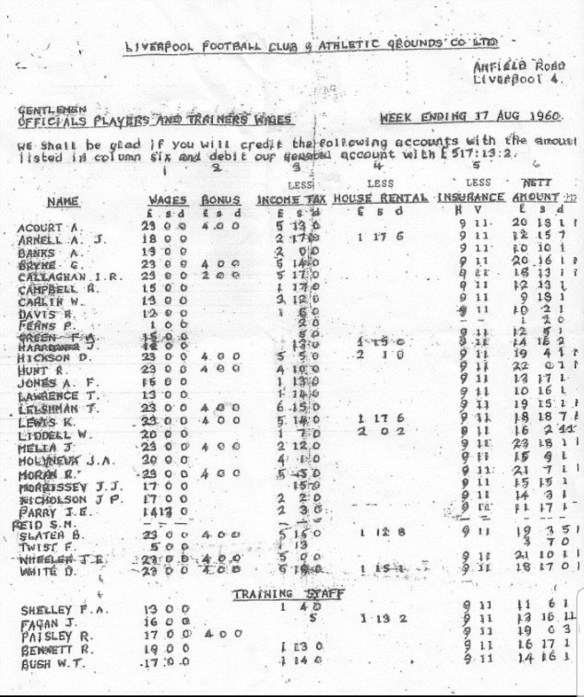
George Scott, one of the Scotsman’s first signings, and a man Shankly described as the “12th best player in the world,” recently sent me a copy of Liverpool’s weekly wage bill from 1960. It covered everyone from players to coaching staff, and it came to a grand total of £517:12 Shillings and 2 pence.
According to the National Archive, it would be worth £9,119.33 in today’s money. In the 1960s a sum like that could have bought you 2 horses, 7 cows, 116 stones of of wool or 86 quarters of wheat. It was also the equivalent of almost years wages for a skilled tradesman.
So, it was a big wage bill by the standards of the day. But, it is dwarfed by those of the Premier League era, even when you factor in inflation.
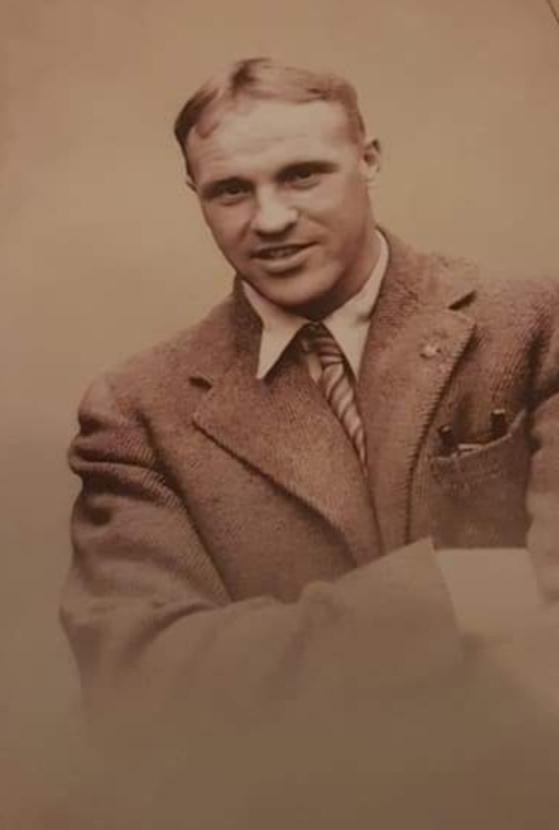
Liverpool FC’s weekly wage bill in 1964
By now I am sure nobody is shocked or surprised by these revelations. I’m certainly not. Nor can we blame individual players for taking the rewards on offer to them. Who amongst us would look such a gift horse in the mouth.
However, it does speak to a growing divide between those who pay to watch the game and the stars they idolise. In Liverpool, like in many working class cities, there are people making incredible sacrifices in order to watch their team, and there are those who can barely afford food, let alone a match ticket. Those people will likely never even watch their heroes in the flesh, much less identify with them.
In the 50s and 60s you could reasonably expect to see a player on the bus or in the pub. Even earlier, in the 30s, supporters would chat to Elisha Scott – the club’s legendary goalkeeper – as he took the ferry from Birkenhead to the Pier Head before a game. These men were still stars, but they were within reach and identifiable.
Today’s players feel like movie stars, and those with a human touch, who go out of their way to bind with the supporters are to be cherished. Mo Salah, Andy Robertson, Trent Alexander-Arnold and James Milner, amongst many others, do leave you with the sense that they understand their enormous privilege and remember their origins.
However, for me, this is a more systemic problem. It’s obviously not just Liverpool’s problem, or even the Premier League for that matter. Though neither seem even interested in addressing it. This is of course a political problem and one that UEFA and FIFA must do more to address.
There are so many reasons why they should. For a start the current system is unsustainable. There are those who argue that clubs going into administration as a result of unsustainable wage bills is just business, a sort of Darwinian natural selection. Or, the natural consequence of market forces and poor management. The footballing authorities will hand out their punishments in response – fines, points deductions, relegation and even expulsion from competitions. And, we all move on.
But there’s a cost that goes beyond all of that. Whole communities suffer as a consequence, when their club goes out of business. Football clubs employ people beyond the playing staff and they bring hope and something to look forward to for so many. Because, as Shankly recognised, football is a communal experience. It’s more than a business.
I spoke to Karen Elizabeth Gill, Granddaughter of Bill Shankly and author of a fascinating biography of the man, The Real Bill Shankly. She told me,
My granddad was all about passion and commitment to the game. He would have played for nothing and expected his players to feel the same. The supporters, for him, were equally important in the equation. So having inflated wages for the players, which could end up with money-oriented players as opposed to football-oriented ones and core supporters whose wages might leave them unable to afford inflated ticket prices, for him, would mean the destruction of the game he loved so much.
So, when faced with the stark contrast between the football played and watched by our grandparents and their idols, and the game watch today, I won’t pretend to feel shock or surprise. I do feel that the game is slipping through our fingers though, if it hasn’t already moved completely out of reach.
I hope that’s not the case. However, if we are to reclaim even a small part of it, supporters need to become more vocal and more active in shaping the future of the game and the clubs they love. Politicians also have a role to play in influencing the direction of the game. Indeed it may take political action to rescue it.
With a potential UK General Election on the horizon, it wouldn’t do any harm to let them know.
In my mind’s eye, the first game of the season at Anfield conjures images of sun-baked streets, the Sandon car park packed to overflowing and chippy queues spilling out onto pavements. Not this season though. Instead, on Friday 9th August, L4 was warm, wet and muggy as it greeted the Champions of Europe and their adoring followers. In many ways this was an unfamiliar start to a campaign.
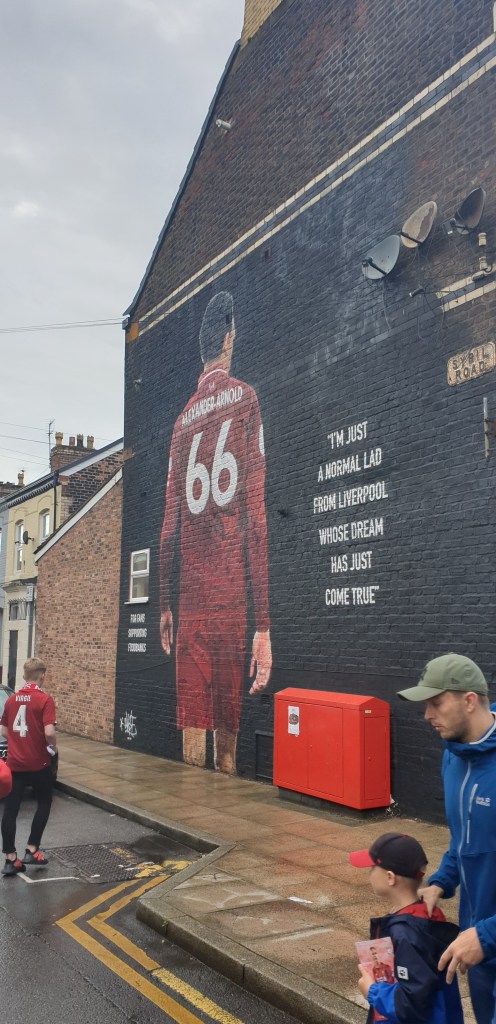
There was even a new object of pilgrimage too. Added to the old haunts – the Shankly statue – the food-bank collections, the myriad pubs and fan-zones and the fanzine sellers dotted around the stadium was a giant mural of Trent Alexander-Arnold – an ordinary kid from Liverpool, whose dream came true.
Scores of people made their way along Anfield Road to Sybil Road, where they would find a row of terraced houses basking in their new found fame. To their right, on the opposite side of the road, the great Georgian town houses, a symbol of the area’s affluent past stared on in green-eyed jealousy.
For all the wealth and power of those ghosts of Liverpool’s past, they would never have felt the passion and adulation experienced by this working class lad from West Derby and his team mates. One-by-one they queued to have their picture taken in front of his image. In the rain, Kids younger than Trent and perhaps dreaming that they one day will adorn a wall, or be idolised by generations, posed in front of the painting. Maybe, they dreamed of scoring in front of the Kop and feeling its power rattle their bones.
That’s the point of the mural, isn’t it. To inspire, to reach out and say ‘there’s a chance for you too. If you work hard and sacrifice like me.’ Maybe. But there’s no harm in dreams anyway. We know. At Liverpool, perhaps more than anywhere else, we know that.
The rich merchants of Anfield Road have gone, it’s our place now. That’s because we’ve dreamt of glory for each other, and then fought to make those dreams a reality. Just like Trent, Jamie and Stevie and all the others who have graced our history, have dreamed.
So, all around me were the old familiar places juxtaposed with the new and the unusual. And, the game itself turned out to be a mirror of all of that.
There was the old swagger we enjoyed last term and evident in the first half against Norwich, accompanied by the never-satisfied few who bemoan every miss-step and proceed to hound their favourite whipping boys throughout the game, irrespective of the quality of the performance.
For example, the sight of Origi being dispossessed shortly after Norwich had scored their meaningless consolation was greeted by one inexplicable shout from a fella near me.
‘Get him off, he’s shit!’
It was greeted with tuts and expressions of disbelief, but it still jarred. Another guy had shouted to Henderson to “get off and stay off,” at half-time. This is a phenomena almost as old as Anfield itself. For all our famed support and never give up mentality, we have always been ‘blessed’ with such absolute idiots.
Jack Balmer, Liverpool’s bald-headed striker of the 1930s and 40s, who hailed from the same district of West Derby that gave rise to young Trent, was often on the receiving end of abuse from supporters. Bob Paisely once wrote about how his treatment at the hands of some fans had hurt the player, who had scored 98 goals in 289 appearances for the club.
In the pub, before the game, we had been talking about how Ronnie Whelan had often been a player who could do no right, in the same way the current captain, Henderson, can never satisfy some people today. You’d be hard pressed to find anyone who watched the game in the 80s who will admit they did it, but the Irishman would frequently hear their shouts on the pitch.
Just like Henderson though, Whelan would answer his critics by winning the biggest prizes in football. He could do no more. Neither can Jordan.
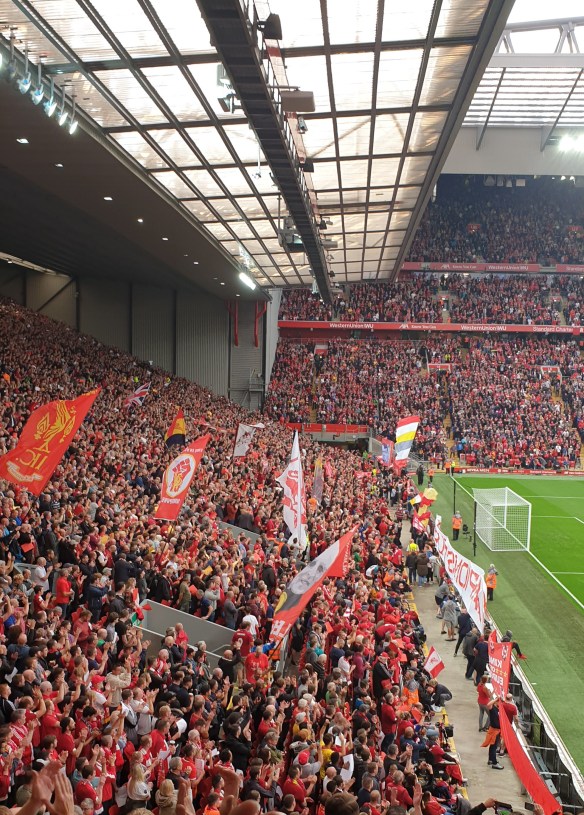
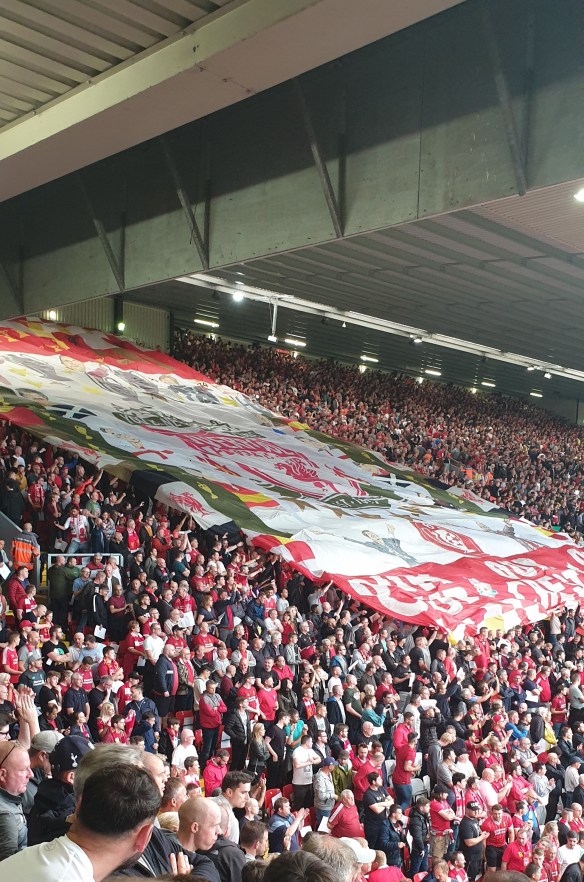
But, for all the familiar bitter barbs from the minority, the atmosphere during the game was a throwback to the fan-parks of Madrid and the glory of our run to the final. The mosaic displayed at kick-off told the world, as if they didn’t already know, that the Reds were back on their European perch. That represented something new in the recent context, a trophy win to gloat about. The monkey is off this Liverpool team’s back.
The Kop bellowed, at every opportunity, ‘We are the champions, champions of Europe.’ If it’s not unbearable for our rivals yet – it won’t be long before they are tearing their hair out. That’s exactly as it should be. We’ll keep it up for as long as they would, if we had lost the final – times six.
Imagine singing that for twenty minutes solid at Old Trafford or Goodison. imagine the fume. Brilliant isn’t it.
Roared on by a jubilant and at times carnival-like Anfield, the players switched through the gears in the first half. That’s not to say Norwich were out of it though. They threatened a number of times, and Alisson was called upon to twice prevent what looked like a certain goal. One save produced a crescendo of applause from the Kop and repeated chants of his name.
Not since the days of Clemence and Grobbelaar have we had a keeper of this quality. In fact, in one of those moments in the game, where your mind drifts, I began to muse on whether Alisson may well be one of the best since the days of Elisha Scott. Such is his command of the area and ability to calm his defence, I can surely be forgiven my reverie, no matter how premature it might be.
So, the sight of him clutching his calf and falling to the turf deep in the first half was like an arrow through the heart. We can only hope the injury isn’t as bad as it looked. The sight of him walking off, rather than being stretchered was the smallest crumb of comfort.
What was heartening though was the roar of approval for Adrian, as he ran onto the pitch. This was the Kop as it should be, as it always was. Getting behind the man with the Liver Bird on his chest, regardless of any misgivings. Once he crosses the white line, he’s one of us and part of the fight.
Back in June, the former West Ham man could scarcely have dreamed that he would be running out in front of a huge crowd at Anfield – for the European Champions, and with the team already 3-0 up. The reserve keeper showed no signs of nerves.
Liverpool had gone ahead inside ten minutes, thanks to an own goal by Grant Hanley, who had turned in a cross from the left from Divock Origi. From my vantage point, it had seemed like the hero of Madrid himself had scored and we roared his name. It didn’t matter though, he can rightly claim the assist.
Then came Mohammed Salah with the Reds’ second in the 19th minute. It was a crucial goal in my view, and not just in terms of the match. So much of Salah’s game is in his head, and the confidence he will take from kicking off his season with a goal is immeasurable.
The sight also of Bobby Firmino with the assist and the resultant chants of ‘Egyptian King’ followed by our mesmeric ode to his Brazilian strike partner were all welcome signs of the old and familiar Liverpool. The Liverpool of last season, at one with its people and relentless on the field of play.
With barely half-an-hour on the clock the Reds were three up. This time we were watching van Dijk score, and Salah was providing the ammunition. His lovely cross from the left was headed home with aplomb and we were ecstatic. None of us quite knew what to expect before the game. It had potential banana skin written all over it.
However, the Reds had simply picked up where they had left off the season before. Memories of a forgettable preseason had evaporated and the explosion of euphoria was reminiscent of much bigger games. The Reds were back in town.
The potentially disastrous loss of Alisson was brushed aside, when on 42 minutes Origi found the net with a brilliant header, following a superb cross from Trent. The young Scouser was also picking up where he left off last time out. He had found his groove and the Kop found its eleven button.
Amidst the noise and jubilation half time felt like a kick in the teeth. An unwelcome interruption. And, so it proved to be.
As I bounced down to the concourse underneath the famous old terrace, I entertained thoughts of a complete rout. Of six, seven, maybe even eight goals. Well, a Kopite can dream. But, while the second half was hardly a nightmare, it was a shadow of the first.
In truth, Norwich deserved their one goal. They had given it a go and some the of the football in the final third was impressive. It remains to be seen whether the real Norwich emerged after half time, and if we can expect better results for them in the coming season. They will certainly look for the positives in that second period as they plot their bid for survival.
For Liverpool, the one bright spot in the second half was Sadio Mane. The last to return to preseason, he showed no signs of rustiness and was a thorn in Norwich’s side from the moment he entered the fray, replacing Origi. Both players received rapturous applause as one departed and the other ran on to the pitch.
The visiting supporters sang ‘1-0 in the second half.’ You’d imagine that’s exactly what their manager will have told his players in the dressing room. Restricting the European Champions to just four goals, and grabbing a consolation at Anfield maybe the benchmark for a team like Norwich. It is also a sign of the progress made by Klopp and his players.
So too are the mutterings and grumbles of some Liverpool supporters, as they left the ground. This was the first game of the season. The Reds will undoubtedly improve and grow into the campaign. We can only hope that it will include Alisson. But Adrian looks a competent deputy. Meanwhile the team can only beat what’s in front of them.
A number of messages greeted me when I arrived home. One of them, on social media, was from an Everton fan. It said we had looked like Brazil in the 70s, during the first half. But it warned of burn-out and suggested better teams would have turned us over in the second half.
Neither assessment was fair in my view. Liverpool did what they needed to do against a plucky Norwich team geed up by the optimism of a new season in the top flight. It was a free hit for them and expectations among their fans were low. That wasn’t the case for the six-times European Champions (have I mentioned that we won the European Cup?).
For our rivals those comments are a sign of wishful thinking. It’s fun living inside their heads, and the rent is so low, it almost feels like we’re squatting.
The bar has been set for the Reds now. They rule over an entire continent after all. Ambitions and expectations, are soaring. The fact that some are bemoaning a 4-1 home victory on the opening day of a new season, is perhaps another symbol of the team’s rebirth.
Let’s all hope that, as annoying as those moans might be, they become another familiar feature of the Anfield landscape. I could live with that.
Simon Meakin channels his inner Ronnie Corbett, as he looks forward, backwards and sideways to this Friday’s clash with Norwich City, at Anfield.
Nickers Off Ready When I Come Home. That’s apparently what Norwich stands for according to my mate.
Many Liverpool supporters I know – particularly those from Liverpool itself it seems – appear to operate a policy of strict neutrality when it comes to other teams. With the obvious exceptions of Everton, Man United, probably Chelsea and whoever we are fighting with for the title, fourth place or whatever. City were never really that much of a rival until the last few years, despite being Mancs. I get the impression that most Liverpool fans don’t really care who wins between say Sunderland and West Brom.
Whereas I’ve always had a different view. I’ve always had certain favourites and other teams I’ve disliked throughout the leagues. Usually for absolutely no rational reason whatsoever. For example, I’ve always quite liked Middlesbrough, never liked Sunderland; Rochdale good, Stockport, I can’t be doing with them.
Some have remained constant, others have ebbed and flowed. Maybe it’s because they went from playing beautiful flowing, football to being a bunch of cloggers or vice versa. I really don’t like Mansfield purely because of the derogatory comments one of their fans posted about Liverpool supporters after we played them in the cup a couple of years back.
The point of all this is that I have a favourite other Premier League team. And it’s Norwich. I’m not sure whether it’s because I liked their kit, or because they were the first team I ever saw at Anfield back in 1978 aged 7. We won the game 3-0, although I thought we’d only won 2-0 until my Dad put me right. Oh, and I remember being really impressed that their goalkeeper was called Kevin Keelan, which was pretty much the same as Kevin Keegan in my book.
It’s certainly not because of any connection with Norwich. I’ve only ever been there once, to see a girl I’d met in the Blue Angel. It didn’t really work out. Took about three days to get there, she drank too many beers and ended up chucking up everywhere, and I think at one point suggested I should “consort” with her mate instead. On the plus side I did see Gonch out of Grange Hill in the pub (possibly engaged in a hair-brained moneymaking scheme to sell toast or something). So it wasn’t all bad.
Whatever the reason I’ll admit to a little bit of a warm glow when they got promoted back to the top flight. So, once Friday is out of the way, I’ll be wishing them well for the season ahead and hoping that they do more of a Wolves than a Fulham. They’ve even got a German manager so what could possibly go wrong!
Norwich were also the last ever team to play at Anfield when they still had standing on the Kop. I can’t remember much about the game to be honest other than we were awful, and we lost. I’d always thought the score was 1-2 but on checking it turns out it was 0-1. I really don’t have a good track record with remembering Norwich scores. What I do remember is the price of the ticket. £7. And Liverpool’s promise that the move to an all-seater stadium would most definitely not lead to a big hike in ticket prices. Oh no sir. Not ever. I’ll file that one along with the claim that Paul Stewart was going to be the next Ian Rush!
My favourite Norwich game though had to be the prior season when we beat them 4-1. Thanks in no small part to a dominant central midfield performance from a pair of 19-year-old starlets named Redknapp and Hutchison which led me boldly to predict we were looking at England’s central midfield partnership for the next ten years. And, if it wasn’t for Redknapp’s terrible luck with injuries, I think I’d have been proved right. Well, that and the fact that Hutchison mysteriously turned out to be Scottish, and that he seemed to devote more of his time to sticking Budweiser labels on his cock in Labinsky’s than actually playing football.
I must point out that during my in-depth research for this article, I’ve discovered that Hutchison was actually 21 at the time, which slightly messes up the narrative. Most of the rest of my in-depth research however involved reading a Daily Express article with Louise Redknapp talking about getting over her split from Jamie. Talk about investigative journalism at it’s finest! Move over Woodward and Bernstein. I’m taking over! And, of course Louise, in the reasonably likely event you’re reading this, I’m up for a pint if you need someone to talk to. Unless you’ve moved to Norwich. I’m not doing that drive again.
Back to the football. My other favourite Norwich memories have to be Luis Suarez related. And the fact he pretty much scored at least a hat trick against them every single time he played them. Best of all were the four goals he scored against them in the December during the ill-fated Rodgers championship bid. That run-up to Christmas saw Suarez at his absolute zenith in my opinion, as he drove us to the top of the league on Christmas Day. His fourth best goal that night was worthy of being a Match of the Day goal of the month contender. I defy anyone, anywhere to show me a goal that good that doesn’t even make the players best three goals of the night.
Anyway, time for a match prediction. Last time we played them was in a lunatic 5-4 win in Klopp’s early days at the club. Lallana grabbed a last-minute winner, after we almost managed to shoot ourselves in the foot against a side tumbling into the Championship. We’ve learned how to defend a bit since then though. So I can safely say that won’t happen again unless Van Dijk falls down a well. I’m going for a comfortable 3-0 to ease us into the season. A Bobby double and a late Keita pile-driver after coming off the bench.
By Simon Meakin
If you would like to join the Red Voices and write for Tales of Anfield Road, simply complete the form below. Tell me your ideas, or even send me your article or story. It’s that easy.
It’s not been a great week for the Reds in terms of their relationship with the local community. Following controversy surrounding their plans for Anfield to host gigs in the close-season, they have now been embroiled in a row over attempts to trademark the word Liverpool in a football context. This has been followed up with the news this week that Melwood will be sold to housing charity, Torus.
While Everton are busy building their social capital in the city, it seems Liverpool have much to learn from their neighbours in this regard. Liverpool do a lot in the community, but these recent rows emphasise that they need to up their game, in my view.
Ensuring that the club services the needs of its out-of-town and overseas support is essential, and I fully support this. However, care must be taken to maintain and nurture the relationship the club has with its local support.
Here are a few pieces I have written this week about the trademarking controversy, the sale of Melwood and and the campaign in West Derby to retain a lasting legacy after the move to Kirkby. I feel strongly that Liverpool Football Club must do more to engage with its local community. I also argue that they must not wash their hands of their iconic former training base or the area that has supported it since the 1950s.
📚👌 Here's a brilliant, must-read piece from @ShanklysBoys1 on the fate of Melwood, and the yearn for a lasting legacy in West Derby. https://t.co/RCfXD3021p
This is a really interesting overview of the 'Liverpool' trademark debate via @ShanklysBoys1, who examines the issue+potential implications in detail. The contributions from those worried show just how much concern LFC's bid is causing. Well worth a read https://t.co/Zdc1cvAPof
Monetising the word 'Liverpool': A spectacular own goal https://t.co/NdK2GDEC9G via @ShanklysBoys1 an excellent article , the words Liverpool or even Everton are owned by the people and never can be owned by one entity
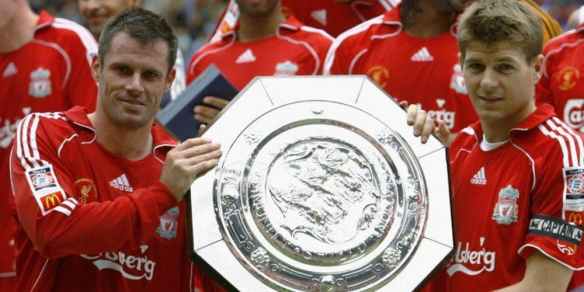
This Sunday, tens of thousands of Liverpool supporters will once again descend on the country’s capital in joyous football celebration. A trip to Wembley is always the finest way to end or begin a season. This time it’s for the Charity Shield, and I’m loving it. Here’s why.
Preseason games barely get my pulse racing. They never have. In my formative years as a Liverpool supporter, I wouldn’t even know they were taking place, much less what the results were. That is, with the exception of one – the Charity Shield.
For any youngsters reading this, I’m sorry, but it is the Charity Shield. Not the ‘Community Shield,’ and it always will be for me. The modern day penchant for rebranding stuff and then pretending it’s something different has always baffled me.
Anyway. Liverpool have competed for the big shiny shield 21 times. They’ve won it outright ten times, and shared it on five occasions. In the old days, they couldn’t be arsed with penalty shoot-outs and, if the game wasn’t settled after 90 minutes, both captains would simply parade it around the pitch. It would then spend six months in each club’s trophy room.
In the 70s and 80s, the Reds competed for no fewer than 12 Charity Shields, in twenty years. That mattered, because it meant they were winning English football’s big prizes. To be in that ‘curtain raiser’ for the new season, you had to have won the FA Cup or the League title.
So it’s always been the one preseason friendly that really matters to me. Well, that’s not strictly true. There’s the UEFA Super Cup too. If you’re in that, then you’ve either won either ‘old big ears’ or the UEFA Cup. Funnily enough, we’re in both of them this year, such is the club’s revival under Jurgen Klopp.
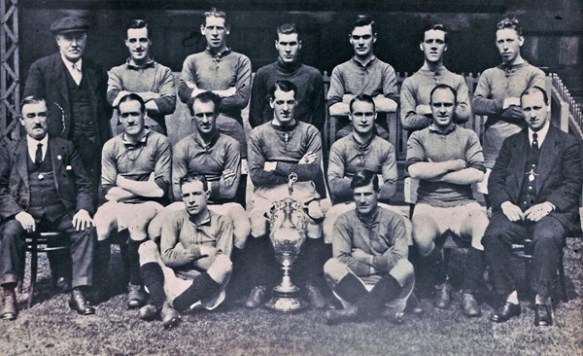
The competition was founded in 1911, and Liverpool’s first foray came in 1922. Then, the famous ‘untouchables’ side, who won back-to-back league titles between 1921 and 1923, contested the shield against FA Cup winners Huddersfield Town. Sadly they lost the game 1-0.
The game took place on the 10th May at Old Trafford, the first time it had been played outside of London and the first time the fixture took place at the end of a football season. Liverpool were presented with the league trophy on the pitch and, despite their defeat, there were joyous celebrations on the team’s return to Merseyside.
Imagine the scenes at Liverpool Central Station, as captain Donald Mackinlay is hoisted aloft by teammates and possibly a few supporters and carried into the street outside. Back then the shield wasn’t contested under the same rules as today though. Those competing for it hadn’t necessarily won anything.
So, despite winning the league again in 1923 and 1947, the Reds would wait 42 years before contesting another Charity Shield. That came in 1964 when, after a 2-2 draw with West Ham at Anfield, Liverpool claimed their first success. It meant Shankly’s men would share the shield with The Hammers.
They would repeat that feat in 1965, with another 2-2 draw against Manchester United. Liverpool’s first ever success in the competition came courtesy of a 1-0 over Everton at Goodison Park in 1966. It was the first of three Charity Shield encounters against the Blues, with the Reds winning one, drawing one and losing the other.
The game in 66, though, became more famous as a celebration of Merseyside supremacy in English football than anything else. The Reds had won the league and the Blues had won the FA Cup and both teams had contributed players to the England World Cup winning squad. Supporters packed into the old stadium watched in awe as all three trophies were paraded around the pitch before kick off.
It was the first and only time that has ever happened. And, it happened on Merseyside.
In 1974, after the Reds had vanquished Newcastle in the FA Cup final, they would meet league champions Leeds United on the 10th of August. It was the first Charity Shield to be played at Wembley and to be televised – but the game was anything but charitable.
It would also be the last time Shankly ever led Liverpool out at Wembley. The Scot had sensationally resigned earlier. The stage was set for an incredible battle.
So tempestuous was the match, that at one point Kevin Keegan and Billy Bremner became embroiled in a fist fight. Both men saw red, and received lengthy bans from the FA. The country had never seen anything like it, and there were even calls for the clubs to face punishment. Fortunately that didn’t happen.
Phil Boersma scored for the Reds in the 19th minute, but Leeds levelled in the 70th through the brilliantly named, Trevor Cherry. That meant that for the first time in the history of the fixture, the game would be settled on penalties.
The Reds won the shootout 6-5, after David Harvey missed his spot kick. It had been a memorable game all round and the one question on everybody’s lips as they left Wembley was, how were only two players sent off?
After the largess of the previous three decades, the 1990s brought relative austerity in trophy terms for Liverpool. That meant only two Charity Shield matches, in 1990 and 1992. The Reds would share it with arch rivals, United, at the start of the decade. But they lost 3-4 to Leeds in 92.
However, thanks to Gerard Houllier and Rafa Benitez, the new millennium brought three shots at the newly named ‘Community Shield.’ Those games would be contested outside of England, at Cardiff. The Reds beat United 2-1 in 2001 to cap a memorable season and also followed that up with the UEFA Super Cup.
They lost 1-0 to Arsenal in 2002 and then won the last of their shield victories in 2006. That year, Rafa took his FA Cup winners to Cardiff and they beat Chelsea 2-1. It was a game played in glorious sunshine and memorable for trademark thunderbolt from distance, courtesy of Jon Arne Riise.
So, it’s been 13 long years since we tasted the sweet smell of Charity Shield success. That’s the longest gap since we first tasted success in 1964.
Now Jurgen has a chance to add his name to the long list of winning managers by claiming our 11th outright win. Admittedly, we’re not there courtesy of a Premier League or FA Cup victory this time. However, we came within a hares breath of claiming the league title, and we’ll all settle for the Champions League over the FA Cup. And, let’s face it, the shield would look really nice sat next to ‘old big ears’ in that trophy cabinet, wouldn’t it?
So, while there may not be a banner for our ‘la decima’ of Charity Shields and the Kop may not sing ‘we won it ten times,’ that gleaming silver trophy will always mean something to me. That’s because, just as it always has in my lifetime, it’s a symbol that the Reds are at the top of the game, competing for the big prizes.
As discussed on these pages last week, Liverpool Football Club’s application to claim the word ‘Liverpool’ as their intellectual property, when used in a football context, has sparked a great deal of controversy. Such was the reaction to the news, that club CEO Peter Moore took to the airwaves on BBC Radio Merseyside to explain the club’s position.
Mr Moore was keen to point out that Liverpool FC were not seeking to penalise local vendors, but rather prevent those who would seek to mislead customers with fake products purporting to be official merchandise. However, he had to concede that even a t-shirt which simply contained the word ‘Liverpool’ on it, surrounded by images of footballs could be in breach of the club’s intellectual property, should the club’s application be successful.
While some supporters have suggested that the club is perfectly within its rights to protect its products from cheap counterfeits, pointing out that these damage the reputation of Liverpool FC and deprive it of potential income, others are deeply troubled. They argue that the club are seeking to monopolise something that does not belong to them, the name of the city itself.
I contacted Liverpool Football Club for comment, and a spokesperson told me:
‘We are applying to register ‘Liverpool’ as a trademark but only in the context of football products and services. We are not and wouldn’t ever, seek to register ‘Liverpool’ across the board. This application is strictly to protect the club and supporters from those benefiting from inauthentic products. The benefits to the club to have this protection in place are to ensure all revenues from official products and services are channelled back into the club and this is reinvested into the team and supporting infrastructure.’
They were also keen to make clear that, only if the club felt an organisation was benefiting from inauthentic products or services which were being sold to supporters, would it consider taking action.
Liverpool FC already hold the intellectual property rights to a number of other words, phrases and symbols. For example, they have trademarked ‘This is Anfield,’ ‘YNWA,’ and the Liverbird image, in the context of football. In relation to the latter, the club was refused the right to trademark the emblem of the city, in the UK. However, they went on to make a successful application to the EU.
Many argue that club has already done enough to protect its interests, and that attempting to trademark the name of the city is a step too far. Ian Maloney, the Liverpool born founder of Love Follow Conquer, an independent clothing label, argues that if the club are successful in their application, it will give them the right to police who is allowed to produce football related clothing with the word ‘Liverpool’ on it.
He points out that the club’s application includes reference to classes ranging from apparel to podcasts, broadcasting, education and catering, and argues:
‘If LFC are successful in their application trademark law states the holder of a trademark must enforce their trademark. They won’t be able to pick and choose when to enforce it otherwise the trademark could be challenged by others.’
This potentially challenges the argument put forward by the club, that they will be able to pick and choose which independent producers they pursue. I don’t possess the legal expertise to comment on the above, but a cursory internet search suggests that an organisation is at risk of losing its trademark, if it fails to use it after it is granted.
However, for Ian, there is a deeper issue at stake. And, his concern is one shared by many of the people who responded to my original post. That is, an objection to the club attempting to have ownership and control of something they didn’t create or invent – the word ‘Liverpool.’ For many of us, it is simply unfathomable as to why trademarking ‘Liverpool FC’ wouldn’t be enough to protect the club’s brand. Why seek monopoly over the name of a city?
Ian Maloney picks up the point, suggesting that unless the application is withdrawn, it could drive a wedge between the club’s owners, the city and its supporters. He argues,
‘The City of Liverpool is a community and has been a cultural centre for over 800 years. Liverpool FC wants to be part of that community and because of this it can’t own the community it wants to belong to. Liverpool FC shouldn’t have the right to trademark the word ‘Liverpool’ in the same way any other business shouldn’t. The word ‘Liverpool’ belongs to the people of Liverpool, not to any corporate business.’
Liverpool City Councillor, and leading figure in the Fans Supporting Food-banks charity, which the club supports, Ian Byrne, feels that the move jeopardises the futures of independent traders, and adds his voice to calls for the club to withdraw its application, saying:
‘The importance of the independents who do so much to add to our fan culture cannot be over-estimated. They are fundamental to our current success on and off the pitch, and the club have previously embraced their role. This plan will place them in danger. FSG should cease with the trademark idea, which also endangers the huge bank of goodwill and optimism built up last season.’
Of course, the independent producers and traders aren’t the only stakeholders concerned by the potential trademark. A number of local amateur football teams, such as AFC Liverpool and City of Liverpool FC (COLFC) also use the name of the city. One of the directors of COLFC, Peter Furmedge, told me:
‘City of Liverpool FC has a number of concerns about this trademark application, particularly as it would give LFC effective ownership over the word “Liverpool” in every conceivable football related context.’
Peter explains that his club is committed to the principles of common ownership and community wealth building. Central to this, is the fact that ‘Liverpool’ is part of a shared identity, an identity that represents significant social capital that has been built up over many generations. He continues:
‘Such a shared asset, and the social capital it has accrued, belongs to all of us within the “Liverpool” community. We contribute to its value daily, just as previous generations have done, and future generations will do. A shared community asset, like “Liverpool”, should never be appropriated into private ownership. At “fair value”, nobody could ever afford to buy it!’
To Peter, the value of the name ‘Liverpool’ has been created by the activities, efforts and sacrifices of countless generations. All of us, as citizens of this great city, continue to contribute to this ‘social capital’ daily. Liverpool FC are just one component of that community, as are Tranmere, Everton and others. Sure, they have also contributed, quite considerably in fact, but does that entitle them to monopolise it in any context?
While there is no suggestion that Peter Moore is acting in bad faith, when he states that the club would never seek to act against City of Liverpool FC or others, there is an objection to being placed in a subordinate position to the club, if the trademark is granted. And, there is a concern that organisations, like COLFC, would be required to ‘get the nod’ from Liverpool FC, in order to continue to use their own name.
In addition, others have argued that, even if we accept the club’s assurances today, there is no guarantee that FSG’s intentions won’t change in the future. And, there is a real fear that potential future owners could use the power of the trademark to shut down all competition. As Peter points out,
‘This is something that could occur in any number of realistic scenarios. For whatever reason, future owners of the club may not be willing to accept the presence of other football related activity taking place with the word “Liverpool” involved. Liverpool supporters will remember the antics of Hicks and Gillett, and the infamous “sons of strikers” dossier on supporter activists. Imagine that lot, and Christian Purslow, with these trademark rights to play with!
‘Unfortunately, rogue football club owners and executives are not uncommon. In my 30 years involvement in the football supporters’ movement, I have met many supporters’ groups at clubs with ownership regimes that would not hesitate to use the trademark rights that LFC has applied for as a weapon against perceived local rivals.
‘Regardless of the expressed best intentions of the current LFC ownership, they cannot guarantee that somewhere down the line the club will not have owners that will use these trademark rights in ways that LFC currently assures us they won’t, but the wording of the trademark application clearly allows.
‘A further concern of ours is that LFC may sell, or transfer, the trademark rights to a third party, such as a commercial partner. LFC has previously done this, when the Moores and Parry regime transferred rights to Adidas. That severely restricted LFC’s ability to develop its own brand. As things stand, if the trademark is granted, there is nothing to prevent a third part from using the rights as leverage in raising their brand awareness – this being the whole point of commercial partnerships after all.’
Another independent trader shares his concerns. Hat Scarf or a Badge have been producing Liverpool FC related apparel close to Anfield for many years. Their products have been worn by supporters and ex-players alike. Indeed, their designs are inspired by and continue to inspire supporter culture. I contacted them for comment, and found they share many of the concerns raised above. A spokesperson told me,
‘We are concerned about how these trademark rights may be used by future owners.’
Transalpino, who take their name from the epic trans-Alpine trek taken by Liverpool supporters on their way to Rome in 1977 have similar concerns. A spokesperson told me,
‘The main concern is that ‘Liverpool’ belongs to the city, I totally get that they are a business and they have to protect their brand. I can accept them trademarking ‘Liverpool FC.’
‘Peter Moore said on BBC 5 LIVE that it wasn’t the small local vendors they were after. but he then went on to say that a red shirt with ‘Liverpool’ on surrounded by footballs would be viewed as alluding to be official merchandise.
‘The club will do what they want, once they have the trademark. They’re a US multi-national who want to take ownership of the name of our city, what happens once they sell to unscrupulous owners?
‘When I learned of this, in protest, I made an application to trademark ‘Manchester’ in a couple of classes, I will be monitoring it to see if we succeed. I will make a big song and dance about it if we lose, especially if Liverpool win.’
Another group of creators and innovators, who could potentially be affected by this move, are the various fanzines, websites, podcasts and other online content producers. It is via these mediums that fan culture is often propagated.
Indeed, there is something of a symbiotic relationship at work, in which the club latches onto supporter content and vice-versa. In my view there is nothing wrong with this, and it should be encouraged. However, the attempt to monopolise words associated with the club dangerously shifts the balance of power in the direction of the club.
I discussed this with Dave Usher, founder and editor of The Liverpool Way, a popular fanzine and website, and Chris Pajak, co-founder and presenter of The Redmen TV, a supporter generated show that broadcasts daily on YouTube. Both are concerned about the club’s attempts to trademark the city’s name.
Dave told me that, while he felt the club would eventually back away from the idea, he has been angered by the move. He’s even more irritated, though, by supporters who he believes are supportive of the club’s application. He told me,
‘Frankly it’s appalling that some suit in a marketing department thinks they have the right to monopolise the word. But, what bothers me even more than that are the fans who are attempting to justify it.
”The same thing happened when they wanted to put the ticket prices up. There were fans out there saying it’s ok because it means more money in the transfer kitty. I mean really? The hundreds of millions they get from sponsorship deals and the unprecedented revenue from TV isn’t enough?
‘Worse than that though are those fans who can’t seem to differentiate between FSG and the club. As far as owners go, we could do a lot worse, but let’s not forget who they are and why they got into this. They are a group of rich American fellas who made a shrewd overseas investment.
‘They aren’t ‘the club.’ They just currently own it. Yet some think it’s ok for them to prevent anyone else from using the word ‘Liverpool’ in a football context? It baffles me, to be honest. It’s actually scary how some people see the world.’
Meanwhile, Chris Pajak doubts whether anyone, anywhere in the world, who purchases unofficial merchandise, outside of an official club store, does so believing it to be the real deal. He explains,
‘It’s a bit of a stretch to say they are protecting people from buying inauthentic products. To me, it looks like a land grab. Liverpool FC want all the money that’s spent on Liverpool FC. With no unofficial merch [sic] on offer, then revenues go up. Simple as.
‘As far as independent retailers go, I can see it affecting their livelihoods. 90% percent of the scarves sold outside the ground will have the word Liverpool on them. What does the club expect them to say – Merseyside Reds? Give over. The word Liverpool does not belong to a football club, it belongs to the people. And, that’s that.
‘This is a foot through the door and, once they own it, there’s no going back. If they own it, they’ll want to protect it. Otherwise why do it in the first place. Even if FSGs intentions are pure, who’s to say the next owners will feel the same. This needs to end before it reaches a point of no return.’
In my conversations with many of the stakeholders affected by this move, it is clear to me that the club’s reassurances have done little to assuage anxieties. Irrespective of the legalities many are sceptical of the club’s intentions, and even those who are willing to believe they are acting in good faith, fear the repercussions under future ownership structures, if this trademark is granted.
With all of that, I remain astonished that Liverpool FC have embarked on this path. It is one that risks reputational damage and could undo much of the goodwill earned in recent years.
There is hope, however. Both City of Liverpool FC and Spirit of Shankly have told me that there is continuing dialogue between the club and interested parties. Peter Moore has described those discussions as ‘congenial and intelligent.’ While Peter Furmedge described them as ‘friendly and constructive.’
It is hoped that the owners will now reconsider and continue to engage in meaningful dialogue with a view to reaching a compromise. There is certainly a willingness on the part of the directors of COLFC to find a sensible solution, with Peter Furmedge telling me:
Notwithstanding our concerns, COLFC recognises the genuine issues that LFC wishes to address. We are looking forward to meeting with LFC at some point in order to negotiate a solution that addresses the concerns of all parties, a solution that respects community shared ownership of “Liverpool” while affording LFC the brand protection they seek. However, the trademark application as it stands must be withdrawn by LFC or, failing that, stopped through public objections.
It seems that the ball is now in Liverpool FCs court. They have the power to step back from this move. I hope they take the opportunity to negotiate on the basis of the shared interests of all involved.
Liverpool Football club have made what The Independent refers to as a ‘bold move’ at the Intellectual Property Office. They are seeking to trademark the word ‘Liverpool.’ Sounds absurd doesn’t it? It is.
However, the club are not alone. Southampton and Chelsea have also successfully monetised – or monopolised – a word that predated their existence. To be fair, Liverpool FC have claimed that the move has been made to protect the club’s profits and supporters wallets, as no longer will we be ripped off by ‘inauthentic products,’ they say.
You know the ones they’re talking about, right? The ones that are cheaper than those on offer at the official club store. So, the club is seeking to protect us from having access to cheaper and independently designed products from places like Hat, Scarf or a Badge, and instead we will be free to pay much higher prices for official merchandise.
There is so much that is wrong with this idea, I barely know where to start. The response to it from supporters groups, like Spirit of Shankly, echoes the views of many grassroots followers of the club and mine. They have issued a statement saying:
‘After a magnificent summer of optimism and celebration for LFC – it is hard to contemplate such an ill-thought out move by FSG. It is one that will alienate the entire fan base.’
With the club’s owners about to enter their tenth year in charge at Anfield, hopes were high that they had overcome their earlier mistakes. The most notable of which was a ticket price hike that provoked a mass walk out during a Premier League game, against Sunderland in 2015.
FSG hardly need the cash either. In recent weeks, the newly crowned champions of Europe have entered the top 50 in a list of the most affluent sporting organisations in the world, having been valued at $2.5 billion. A string of lucrative new sponsorship deals have been announced and the club has earned vast sums of prize money from both UEFA and the Premier League.
FSG are investing heavily in training facilities at Kirkby. And, just this week, there has been talk of an improved and enlarged planning application to the city council, for the expansion of the Anfield Road end of the stadium. This will undoubtedly drive up revenues further.
In short, the club is in rude health. So, you may ask, with so much revenue flowing into the club, why do FSG need to embark on such a highly controversial course of action?
It has always struck me that for all its talk of free trade and apparent love of competition, business does love a monopoly. Football is no different. Consider our club’s history. For that matter, consider any club’s history. Once a community sport, played by people on a park and watched for free, the game has now grown into a multi-national operation fine-tuned to extract as much profit as possible.
From the moment local businessmen enclosed those pitches, erected stands and began charging admittance, they had succeeded in monopolising a community pass-time. Of course that has brought benefits, such as modern stadiums and, for some, the chance to see world-class talent playing live each week.
However, it has also brought sky-high prices, exorbitant merchandising and the gouging of supporters by travel operators and hoteliers during away trips. Those handing over sponsorship cash to clubs then mop up tickets that could easily go to ordinary supporters, which creates scarcity and drives up the price of tickets made available through unofficial sources.
I’m reminded of Robert Noonan’s book, The Ragged Trousered Philanthropists. The book is over a century old, and is a critique of capitalism and something of a bible to socialists everywhere. In it, the author, writing under the name Robert Tressell, describes how the owners of capital are driven to monopolise everything in order to maximise profit. One line in particular comes to mind,
‘The only reason they have not monopolized the daylight and the air is that it is not possible to do it. If it were possible to construct huge gasometers and to draw together and compress within them the whole of the atmosphere, it would have been done long ago, ‘
The Ragged Trousered Philanthropists, Robert Noonan
Well, we haven’t quite reached those extremes yet. But, we are now presented with the the monopolisation of words. The club’s attempts to portray this as being about protecting supporters from unscrupulous traders aside, who really benefits from this move?
It’s certainly not the independent traders who have been the lifeblood of the streets around the ground, or their customers. It is not yet clear what impact this will have on amateur football teams, like City of Liverpool FC.
What we can be absolutely certain of, is the fact that the club will benefit from this massively. Some supporters may well argue that it is in our interests for Liverpool FC to maximise revenue. It will allow them to invest in the playing side and the club’s infrastructure, they might say.
That’s true, of course. But I come back to my earlier point, do they really need this. Is it so necessary to bleed yet more money from the ‘brand’ that the owners are prepared to alienate current and future supporters by attempting to claim the word ‘Liverpool’ as their intellectual property?
I’d argue that it simply isn’t. It’s a foolhardy and completely unnecessary move. It’s one that stems from businesses misunderstanding of the nature of football and its connection with the people.
The owners may well want us to win. I’m willing to accept that. And, I can see that they have done a lot of good at the club. But, their problem continues to be that they cannot see that Liverpool FC is a community asset.
Clearly, it is possible to monopolise it. That is self evidently true. FSG have managed this to great effect at two sporting clubs either side of the Atlantic. However, in the process, they risk killing the goose and depriving themselves of future golden eggs – to torture a metaphor.
It is the community of independent thinkers, creators and, yes, entrepreneurs, who gravitate to Liverpool FC, who generate the unique vibe around the club. ‘This means more,‘ the club says, and it is true. It does.
Liverpool FC, in fact the word ‘Liverpool’ itself, means far more to its people than pounds, shillings and pence. We don’t sing our songs or create our banners in order to increase the power of the brand. We do all of that because we believe the club is something special, different – exceptional even.
Think of Jamie Webster and the Boss Night movement. Consider the wonderful songs containing the word Liverpool and recorded onto CDs by supporters, the edgy designs on t-shirts created by unofficial outlets and loved by supporters. Will all of that now fall under the intellectual property of Liverpool Football Club?
If the efforts of supporters to be different and always authentic become just another revenue stream for the club’s commercial department, then FSG risks killing the originality and creativity that has become synonymous with our supporters. ‘Liverpool’ is the intellectual property of its people. The owners must rethink.
After our historic win against Barcelona, at Anfield last season, Arsene Wenger described Liverpool as ‘the city of music, the working class and football.’ He continued, ‘That is why they keep creating miracles.’ It is an astute and insightful observation. And, it is one our club needs to take to heart.
Many supporters share these concerns. So it is a shame that the club didn’t engage with them more before embarking on this scheme. If they had we could have saved them from scoring what is a quite spectacular own goal.
Alan ball broke my heart, but a letter from Mr Shankly put it back together
By Jeff Goulding
Ever wanted to bottle an instant in time? I have. If I could, there’d be two moments I would want to keep forever. Firstly, I’d bottle the few hours I spent in Stanley Park with my mate Jack, on the 11th March 1967 as we waited for time to creep by and let us go to the game. I’d also bottle the hours after the match was over. More of that later though.
That was some day. I don’t have much affection for matters on the pitch of course. Thanks to Alan Ball for that. But still, If I had a bottle full of that day, I’d be drinking in those memories until my last gasp.
It was a Saturday, derby day. But there was added spice. The Reds were going to take on the Blues at Goodison Park, in the 5th Round of the FA Cup later that night. In normal circumstances that would have been enough but this game was special for a whole other reason.
It would be watched by the largest derby-day crowd ever, thanks to what I suppose Mr Wilson, the Prime Minister, would call the ‘white heat of technology.’ That night, at kick off, there would be 65,000 people at Goodison Park and 45,000 would watch the same game at Anfield, on giant screens erected on the pitch.
That meant 110,000 people watching the same game, live as it unfolded. We’d never seen the likes before.
It would be a magnificent experiment, and the first time ever that a football match would be relayed from one ground to another, live. In an age were one man had already encircled the earth in a tin can, and plans were afoot to put two on the moon, I guess it wasn’t much to write home about.
Still, it was the stuff of science fiction as far as I was concerned. Though, as exciting to me as all of that was, It couldn’t hold a candle to the way those glorious hours in the park felt, before the game got underway.
In the few hours before kick off, in any game, there exists a magical hinterland between joy and despair. Nothing is decided and everything is still possible.
Neither Jack nor me had to face the reality of the result, just yet. So, we simply revelled in the warm grass beneath us and the sunshine and wind on our faces. The air was also warm but blowy. Its gusts chased fluffy clouds through a blue sky and in the distance, I could hear kids laughing as they chased a kite across the park.
This game was going to be a clash between the champions of England – Liverpool, of course – and the winners of the FA Cup, Everton. Eternal glory awaited, along with weeks of gloating. At least it would for one of us.
Jack was an Evertonian but I supported the best team in the world. A team that played in red and who had the greatest manager ever, Bill Shankly. I’d sent Mr Shankly a letter a few weeks before the game. He hadn’t replied yet and I was starting to worry that he wouldn’t. I knew he was busy like, but I wanted him to write to me so badly, I got this sort of funny feeling in my stomach every time I thought about it.
I’d get home from school and, not wanting to ask if it had arrived, for fear of being disappointed, I’d instead stare longingly at my mum. Without uttering a word, and seeming to read the question on my mind, she’d simply shake her head. Every time it happened, it was devastating.
The thought of him, sitting in his office reading the words I had written, even better writing the words ‘Dear Peter,’ as he penned his reply, that was almost too much. If he did eventually write back, I though I’d frame that letter. I’d read it every day for the rest of my life.
Jack had called round to our house just after I’d finished my breakfast, which consisted of a solitary boiled egg. Still, I couldn’t finish it. I’d gone to bed thinking about the match and the same nervous anxiety had been waiting for me when I woke up.
Jack was sat on his bike, one foot on the pedal and the other steadying himself on the street outside our front door. He was wearing his black school shorts and a blue shirt. His knees were still scuffed from playing footy in the street the night before, as were his shoes.
‘Playing out?’ He asked.
It was either that or sit around the house waiting for the tension to build and getting on my Dad’s nerves. Mum was in the kitchen sorting out tea and the smell of pea-wack-soup and bacon ribs bubbling away on the stove was already starting to fill the house.
‘Yeah. Alright.’ I said.
I didn’t bother telling my parents. To be honest, I doubt they’d have noticed I was gone anyway. My Dad wasn’t exactly the most communicative man in the world. He barely spoke to me, unless I was in trouble. And then he tended to speak with the back of his hand.
By day he was half man, half armchair and by night he was in the pub at the bottom of the street. On the rare occasion I was still up when he crashed through the front door, I’d just leg it upstairs before he had chance to see me.
He wasn’t an angry drunk, really. He could be a pain in the arse though. Mum would greet him with a cup of Ovaltine. Then she’d just guide him to his favourite chair next to the wireless, speaking softly and chiding him gently.
He’d just drift off to sleep listening to music. Sometimes he’d be there all night and I’d see him in it, when I got up for school the next day. The Ovaltine would usually survive the night too.
He’d always make it into work though and my mum’s housekeeping money would always be on the mantelpiece at the end of the week. So the rent got paid and there was always food on the table. It couldn’t have been much of a life for her, but somehow she made it work.
I had no real problem with him. I just stayed out of his way. Besides, I had Mr Shankly. I learned more from him than I ever did from my father or at school. He was the gear. John Lennon was too. But Mr Shankly was better.
I grabbed my own bike from the cupboard under the stairs, stuffed an Eagle comic down the back of my pants and off we went to the park. Jack had a duffel bag over his shoulder and in it he had packed some butties and a lemonade bottle he’d filled with water.
We’d fight over who got the first swig and the winner always made it a long one. The first slug from the bottle was always pristine. Each one you took after that, would be full of breadcrumbs.
‘Why do you read that stuff,’ asked Jack, nodding towards my comic and taking another bite from his jam butty.
‘Dunno.’ I replied. I did, but I didn’t think Jack wanted to know the whole story. I was wrong.
‘All that space stuff,’ he continued, ‘I used to think it was daft like, but it’s real now isn’t it. Well, most if it like. Don’t fancy the idea of little green men much.’
He laughed but it was a nervous one. He wasn’t alone. I’d thought about that too and it kept me awake sometimes, to be honest.
We’d both been the pictures to see movies like King of the Rocket Men and we loved Flash Gordon, but the idea that people would actually go into space was just, well, stuff that happened on the big screen. Real people didn’t go to outer space, we had thought. So we could enjoy the fantasy of it all, and had never let the monsters in the films bother us too much.
Now we knew that men, or one man to be accurate, had actually done it, all bets were off. I never told anyone but ever since Yuri Gagarin had taken his spin in the heavens, just five years earlier, I’d been looking out my bedroom window nightly and worrying about what was up there looking back at me.
I wasn’t as much concerned about there being Russians and atom bombs out there in the vast blackness, as I was about the possibility of there being Daleks. The adults and the newspapers were paranoid about the red menace. I was obsessed with the green and the robotic one. Clearly, so was Jack.
‘Me neither,’ I replied with a shudder. Then I laughed to chase away the thought. ‘We’ll soon be on the moon though, and then who knows what will happen, maybe Mars next.’
‘You reckon? My Dad says the Rusky’s will be there first. He says they’re already out there, watching us. I don’t believe him like.’
We both looked up into the blue sky and imagined a cosmonaut staring back down at us. As if the Kremlyn were concerned with the musings of a couple of Scousers in Stanley Park, on derby day. Jack broke the silence.
‘Hey, if there’s an FA Cup on Mars, yous might be able to win that one.’ He laughed at his own gag and I rolled my eyes.
‘Yeah, you lot would be better with Captain Nemo as your manager.’ I replied.
He looked puzzled, but there was an expectant smile forming on his lips. ‘Go ed, what?’
‘Nothing. Just there’s 20,000 leagues under the sea. Sooner or later, you’re bound to win one of them.’
This time the two of us were laughing. And with that, the football had chased away the darkness of the world, both the real and the imagined one. It could always do that, footy. It still does.
We’d been there for hours now and I realised there wouldn’t be time for tea. I’d have to make my way to the ground and join the queues. I had a ticket for Goodison and Jack, the Blue, was going to our ground to watch it on the screens.
My ticket cost 8d and his was a few pennies less. But that wasn’t the only reason I was jealous. It seems odd to me now, but I’d have gladly swapped my seat before the live action, for a chance to be part of something so new and seemingly futuristic.
The Weekly News had described the game as ‘the cup tie that is out of this world,’ and it was difficult to argue. Though there was plenty of debate in the letters section. One Red had written in, saying that Tommy Lawrence could take the day off, as Everton’s strikers wouldn’t get near Liverpool’s goal.
A Blue wrote, that the Reds strikers lacked the guile to breakdown Everton’s rearguard. With the likes of Ball and Young upfront, who was worried, he gloated.
We dropped our bikes off and I walked with Jack to Anfield, before I doubled back through the Park to Goodison. I wanted to sample the feel of the place and take in some of the excitement. It was still light and the crowds were already gathering.
The queue for the Kop turnstiles stretched along Walton Breck Road, down Kemlyn Road and eventually reached the houses at the start of Anfield Road. It was no surprise. This was the biggest derby since the Reds got back into the first division, in 62.
I saw Jack into the throng and said my goodbyes. ‘Hope you lose,’ He shouted with a wink. ‘Same goes, I shouted,’ and off I went. The temperature had dropped a little and the wind was up, in more ways than one. So, I reached into my pocket and pulled out the cap my Nan had knitted for me.
It was red, of course, and she’d stitched the word LIVERPOOL in white piping, just above the brim. I placed it on my head and strode off with pride.
We were packed into Goodison like sardines. The noise as kick off approached was incredible and I could hardly hear myself think. I felt confident, I really did. We were the champions and we had the likes of St John and Hunt upfront and Smith and Yeats at the back. I didn’t think we could lose.
I was in for a shock.
The first half was even. That shouldn’t have been a surprise to me. These were the two best sides in the country, after all. But, on balance I thought Liverpool had done enough. Then Everton launched an attack.
To my right were two lads who seemed to be mates. They were probably about the same age as Jack and me, and one of them, the one with a red and white scarf around his neck, screamed something I couldn’t quite make out. Whatever it was, his mate, who had a blue rosette pinned to his jacket, didn’t like it one bit and he shoved his friend right into me.
A little scuffle broke out, and we all missed the fact that Alan Ball, who seemed to have drifted too far to the right of Lawrence’s goal, had flashed a right footed shot into the net.
There was an almighty roar, and at first I thought Liverpool had scored. Then, when I saw the delight on the faces of Blues all around me, my heart sank. The kid with the rosette was laughing now and his mate was fuming. So was I.
The Reds huffed and puffed throughout the second half, and as the final whistle approached the sense of dread in the pit of my gut grew. We were out of the cup, and worse still, I had weeks, maybe months of torment to come.
Jack would be merciless and he wouldn’t be the only one. The walk home was gloomy. The street lamps were on and I could just make out a few stars in the night sky. In my head I begged the Emperor Ming, the Russian Cosmonaut or whoever was watching, to just put me out of my misery. No release was forthcoming.
I walked past the pub at the bottom of our street. The lights illuminated the paving stones beneath my shoes. The atmosphere inside seemed huge and it too escaped the confines of the bar. It was raucous and good-natured.
Above the clink of glasses and laughter, a few songs could be heard. They toasted ‘St John’s body’ and promised to ‘hang the Kopites one-by-one on the banks of the royal blue Mersey.’
It stung. There would be worse to come though, as the Evertonians refused to pass up this golden opportunity to rub our noses in it. In the days that followed, fake funeral cards were handed out by the Toffees to poor unsuspecting Reds.
They read, ‘In Memory of Liverpool FC, who died in shame at Goodison Park,’ or something like that. Jack brought some into school on the Monday after the game. And he placed one on my desk, ready for me to find. I didn’t see the funny side. This one hurt. It hurt badly.
As I neared my front door, I noticed Mr Giordano, our neighbour, smoking a rolled up cigarette as he sat on his doorstep. The Giordanos lived in the terrace next to ours. He was a nice man. My Dad always referred to him as an ‘eye-tie.’ I was thirteen years old before I realised that meant he was from Italy.
His wife was English though, and I later learned that he had been a prisoner of war, in a camp in Halewood. They had allowed the POWs out at weekends if they had behaved themselves, and Mr Giordano had met the love of his life at a church dance.
On summer nights, I’d lie on my bed, with my bedroom window open and listen to the weird music coming from their yard. It always featured some fella singing in a funny language and a really deep voice or a high-pitched woman, but it was strangely soothing.
Once, I had kneeled on the ottoman in front of my bedroom window and sneaked a peak into their yard. It was filled with flowers, growing out of buckets dotted all around. Light from their kitchen window bathed the petals and in its glow I could see the two of them, dancing slowly as the music wafted into the summer evening.
I was only a kid, but somehow it affected me. I remember thinking, ‘so that’s what marriage should look like.’ Anyway, I knew it would take more than a bit of Italian opera to lull me to sleep that night, or any of the of the nights that followed.
‘Goodnight Mr Giordano,’ I called, as I passed his door.
‘Ah, ragazzo,’ he called out to me, blowing smoke into the air.
I had no idea what that meant but I waved to him anyway. he must have realised my mood, because he called out again, this time in English.
‘That Alan Ball,’ he said, ‘he’s some player, eh, ragazzo. You’re still campione though, eh?’
He was right. We were. But the FA Cup meant so much then. It didn’t help. I smiled weakly and pushed open our front door and disappeared inside.
To my surprise, my Dad was in and still up. He was sober too, and sat next to the wireless listening to the news. My mum was on the couch, knitting. She looked up as I entered the living room and her smile was full of pity.
My Dad turned off the radio and turned to me. ‘Bad night lad.’ He stated, in a matter of fact tone. But his face said he shared my pain.
I was so surprised to hear him speak to me, much less show some sympathy, that I almost didn’t answer him. Instead I just slumped on the settee next to my mother.
‘You could say that,’ I managed eventually.
‘There’s soup in the pan on the stove, and potatoes, cabbage and ribs, if you’re hungry son,’ she said. Mum always thought of our bellies in times of crisis.
I told her I wasn’t hungry and thought about going to bed. Then Dad did something that changed the whole complexion of the night. He handed me an envelope. It had already been opened, and the seal was all jagged, I could see the letter inside. My heart soared and my stomach began to flutter.
‘What’s this, Dad?’ I asked, but I knew already.
‘Sorry son.’ He started. ‘It came in the second post yesterday. I only saw it today. Your mum had put it on the mantelpiece and forgot all about it.
‘I’m afraid I opened it already though. You’ve never had a letter before, and, well, I just thought it would be for me. I didn’t read it all, I promise. But, what I did read, well I reckon it’ll cheer you up a bit like.’ He smiled.
I tried to remember the last time I’d seen him smile, properly. I couldn’t. It lit up his whole face and I felt a tear find its way to the corner of my eye. I looked down at the letter in my lap and proceeded to withdraw the paper inside.
At the top of the page, the words LIVERPOOL FOOTBALL CLUB were emblazoned above the club crest. Underneath it was fancy lettering that said Athletic Grounds Co. Ltd. I felt like I was handling some kind of precious treasure, and of course, I was.
It was from Him. Mr Shankly. My heart rate quickened and I felt short of breath, though I was just sitting down. I read his letter in silence, my lips moving as my eyes darted along the page. It said,
Dear Peter,
Received your letter regarding your loyalty to the team and myself, thanks for the same.
It gives me great pride to have so many loyal men like yourself behind us every week in the Kop. I can tell you that your support gives us the belief to win. We hope we give you similar belief. I can tell from your words, that we do. And that is worth more than all the money in the world to me.
We need to keep building ourselves up and up. It won’t be too long before we can give you even more to be proud of.
Yours sincerely
B. Shankly
Manager
I actually cried when I read that. Whenever I look at it, it still brings a tear to my eye. It lifted me out of my morass and it helped me face the Blues in school. The pain of defeat never completely went away, but I could handle it because Mr Shankly said we’d be winning again soon.
It’s 1973 now. I’m 20 years of age and I’m getting married soon. But, every time I set foot on the Kop, I still feel like a kid full of wonder. No matter the score, it’s a magical place.
It took him a while, but Mr Shankly was as good as his word. We were too, and we kept believing. The rewards came, eventually. We’ve just won the league, again and I’m on my way to the UEFA Cup Final, against Borussia Moenchengladbach, in Germany.
I’m so excited. We won the first leg at Anfield 3-0. I was there too. I’m certain we’ll be lifting another trophy before this night is out. Thank you Mr Shankly. Thank you for everything.






 Tales of Anfield Road